
Strategic Partnership for Cybersecurity – CCLab and WonSec Technology Join Forces for EUCC Certification
3
min reading time
On March 21, 2025, a special event took place at CCLab’s headquarters in Budapest, Hungary: we had the pleasure of welcoming the delegation of WonSec Technology, and together we signed a strategic cooperation agreement focused on the EU Cybersecurity Certification Scheme on Common Criteria (EUCC).
This partnership marks a milestone not only for CCLab but for the broader European certification ecosystem as well. Our joint goal is to support the secure and compliant entry of ICT products and services into the European market, especially in light of the soon-to-be mandatory EUCC requirements.

Why does EUCC matter?
The EUCC (EU Cybersecurity Certification Scheme on Common Criteria) is the European Union’s new cybersecurity certification framework, set to gradually replace fragmented national schemes starting in 2025. Its purpose is to establish a unified, high-security standard for ICT products across the EU. Built upon the international Common Criteria standard, EUCC strengthens requirements around data protection, supply chain security, and vulnerability analysis - raising the bar for manufacturers and developers worldwide.
CCLab and WonSec Technology: combining expertise across continents
CCLab is among the first evaluation facilities officially authorized by the EU to conduct EUCC assessments. With over a decade of experience in Common Criteria evaluations and consultancy, we are proud to support global clients with a trusted and professional approach.
Our partner, WonSec Technology, is a leading digital security and certification provider in China, with extensive experience and technological strength. Through this collaboration, we aim to jointly assist manufacturers and developers preparing for the European market and striving to meet the demanding EUCC criteria.

Building a safer digital future together
This agreement is more than a partnership, it is a shared commitment to global cybersecurity. We believe that international cooperation and knowledge exchange are essential to building a secure and sustainable digital economy.
At CCLab, we remain committed to delivering reliable, high-quality certification services in cooperation with our partners - not only in Europe, but worldwide.
Related downloadables
Related downloadables
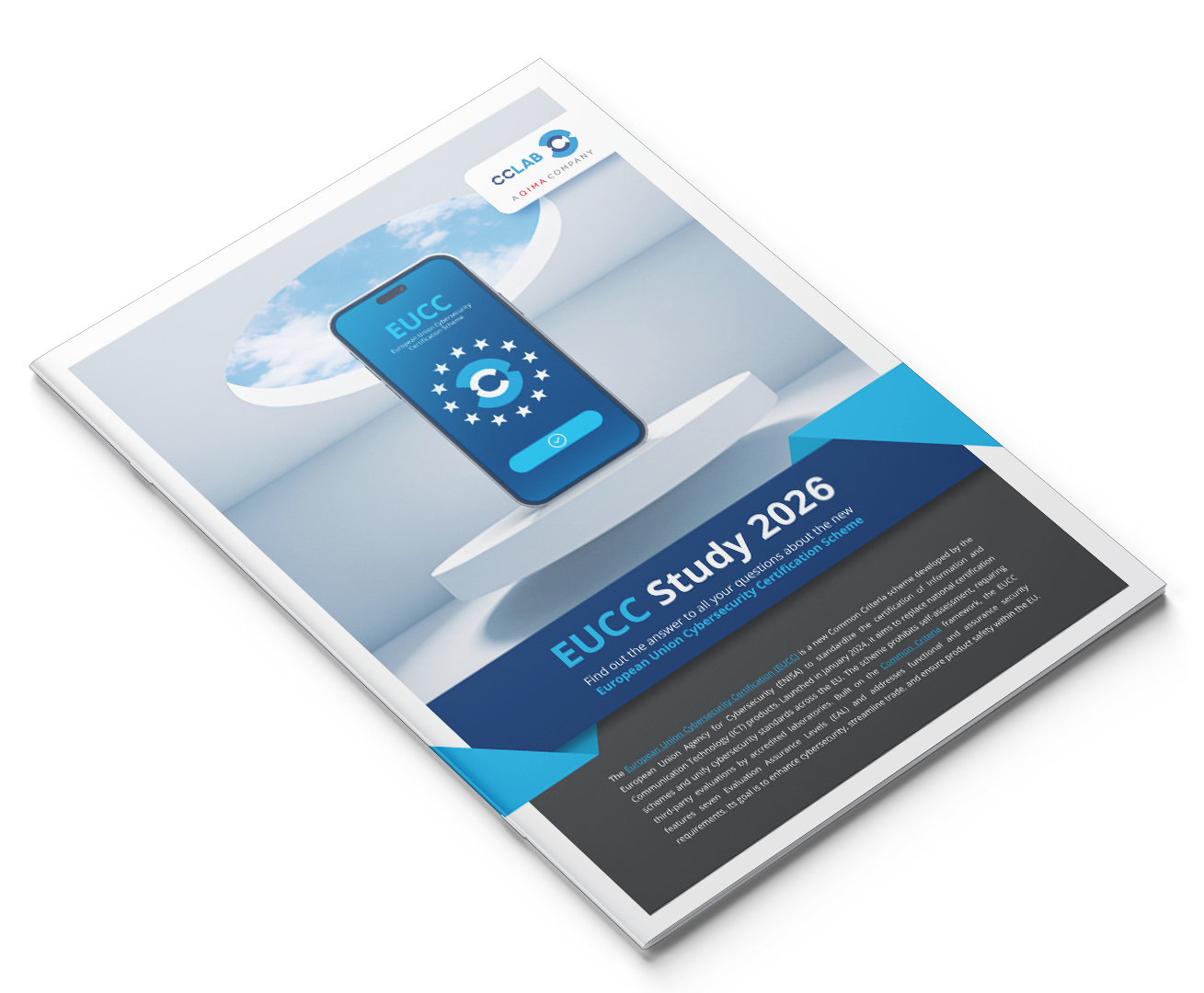
EUCC Study - The New European Union Cybersecurity Certification Scheme
EUCC Study - The New European Union Cybersecurity Certification Scheme
Download EUCC Study 2026 for the most important and up-to-date information about the new European Union Cybersecurity Certification Scheme

Guide and Checklist for Common Criteria Evaluations - updated with EUCC Scheme
Guide and Checklist for Common Criteria Evaluations - updated with EUCC Scheme
Learn everything you need to know for a successful Common Criteria certification project. Save costs and effort with your checklist.
Related news

Securing Consumer IoT: The New Cybersecurity Rules Every Smart Device Must Follow
The era of unregulated smart devices has officially come to an end. With the European Union having rolled out stringent regulations like the Cyber Resilience Act (CRA), manufacturers can no longer treat cybersecurity as an afterthought. Whether you are producing smart cameras, wearable health trackers, or connected home appliances, navigating this evolving regulatory landscape is critical. Fortunately, a globally recognized standard has emerged to cut through the complexity: ETSI EN 303 645. This guide breaks down exactly how this foundational standard acts as your security passport, ensuring your devices meet the rigorous compliance demands of today's market.
min reading time

How to Meet IoT Cybersecurity Standards Using the ETSI EN 303 645 Guide
This article provides a comprehensive guide to meeting consumer IoT security standards using the ETSI EN 303 645 framework. It explains why this standard has become the global baseline for compliance, serving as a critical foundation for regulations like the UK PSTI Act and the upcoming EU Cyber Resilience Act (CRA). The post breaks down the 13 essential security provisions, such as banning default passwords and securing software updates, and outlines a structured assessment path from scope definition to accredited testing. Learn how to treat security as a design constraint to avoid market delays, leverage gap analysis for early detection of vulnerabilities, and turn technical compliance into a trusted competitive edge for your smart devices.
min reading time

CRA Gap Analysis: How Compliance Can Become a Competitive Advantage
The Cyber Resilience Act (CRA) is a landmark EU regulation that establishes a horizontal framework for the cybersecurity of products with digital elements (hardware and software). This sweeping EU cybersecurity law represents a massive shift for the industry. Its goal is to ensure that products are placed on the market without known exploitable vulnerabilities and that manufacturers remain responsible for cybersecurity throughout the product's entire lifecycle. With all requirements of the CRA becoming fully applicable on December 11, 2027, the window for preparation is closing. Manufacturers who view this simply as a regulatory hurdle are missing a critical opportunity. By prioritizing CRA readiness now, you can transform a mandatory product compliance strategy into a distinct market differentiator.
min reading time
