

From Standards to Global Compliance
The third quarter of 2025 marked a definitive turning point for the cybersecurity industry. The primary focus was the August 1st milestone, when the European Union officially enhanced digital device security as RED Articles 3.3 (d), (e), and (f) came into force.
This proactive stance by the EU creates a comprehensive framework targeting network protection, data privacy, and fraud prevention. Throughout these three months, CCLab focused on bridging the gap between emerging EU standards and the global market's reality. A major highlight of our commitment to education was the successful EN 18031 training held at Óbuda University, where we helped professionals translate complex legal requirements into technical reality.
From analyzing the strategic evolution of the EUCC (European Cybersecurity Certification) to providing deep dives into Common Criteria and its lifecycle management, our goal remained the same: providing the expertise needed to turn compliance into a competitive business advantage. Whether you are navigating the European landscape or aiming for global market entry, these insights from Q3 2025 provide the foundation for a secure and compliant future.
In This Edition:
- Is EUCC Enough? Addressing Gaps in European Cybersecurity Certification
- Advancing Education: Successful EN 18031 Training at Óbuda University
- Global Horizons: RED Compliance Beyond Europe: Key Insights for Manufacturers
- From Standards to Trust: How Common Criteria Shapes Cybersecurity Assurance
- The Journey Continues: Lifecycle Management of Common Criteria Certification
Is EUCC Enough? Addressing Gaps in European Cybersecurity Certification
As Europe advances its digital transformation agenda, securing its technological infrastructure has become a top priority. At the center of this ambition lies the European Cybersecurity Certification Scheme (EUCC). While it represents a major achievement in digital sovereignty and a concrete step toward harmonized security, a crucial question remains: Is it enough?
Here’s what you’ll learn in the full post:
- The Power of Harmony: How EUCC unifies ICT certification under the EU Cybersecurity Act.
- Current Limitations: Identifying the gaps that still leave infrastructure vulnerable.
- The Path to Resilience: What additional steps are necessary for a truly secure European landscape.
How can CCLab help? The transition to EUCC isn't just a regulatory change; it's a strategic shift. At CCLab, we don't just test for compliance, we help you understand the nuances of the new framework. Our experts guide you through the certification ecosystem, ensuring that your products not only meet the EUCC standards but are prepared for the "limitations" and future requirements of the evolving digital market.
Compliance is the foundation, but resilience is the goal. Partnering with an experienced lab like CCLab ensures your certification journey is smooth, predictable, and future-proof.
Go beyond the basics and build a truly resilient product.
Blog

How to Prepare and Apply for EUCC Certification for Your Product
10
min reading time
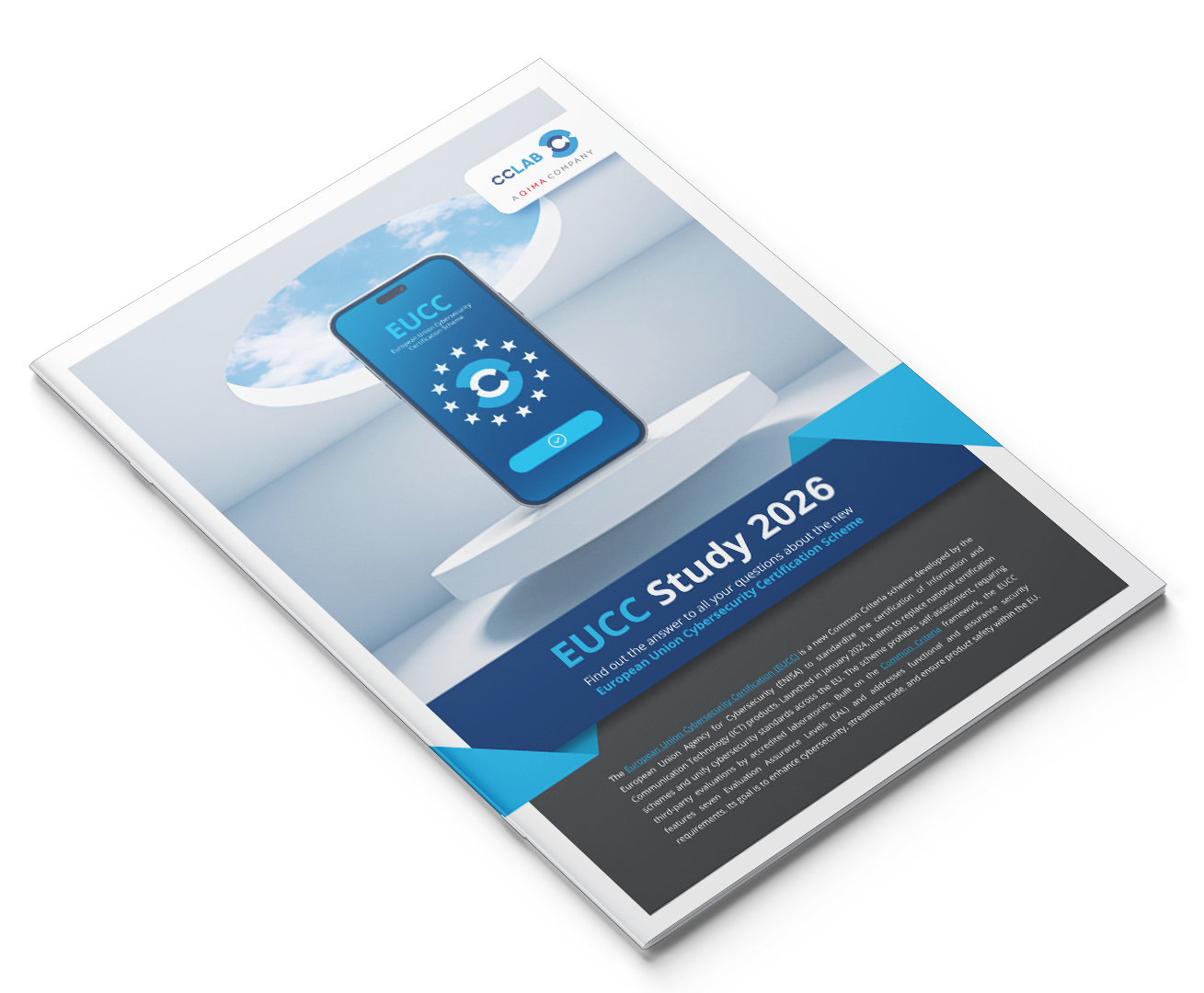
The new Common Criteria Scheme, called the European Cybersecurity Certification Scheme (EUCC), is essential for harmonizing high-security cybersecurity certification of ICT products across EU member states. It facilitates mutual recognition of certifications, supports innovation, and ensures compliance with legal requirements. Fully effective from February 2025, the EUCC aims to provide a unified and robust framework for evaluating IT products, boosting consumer trust, and fostering a more secure digital environment.

Common Criteria: can this article give you an answer to all of your questions?
9
min reading time
You probably heard about Common Criteria, but you might be unsure what it means and whether you should get your product or system certified. We will go into detail about this topic so that, in the end, the concept of Common Criteria is going to be perfectly clear.
How to Prepare and Apply for EUCC Certification for Your Product
10
min reading time
The new Common Criteria Scheme, called the European Cybersecurity Certification Scheme (EUCC), is essential for harmonizing high-security cybersecurity certification of ICT products across EU member states. It facilitates mutual recognition of certifications, supports innovation, and ensures compliance with legal requirements. Fully effective from February 2025, the EUCC aims to provide a unified and robust framework for evaluating IT products, boosting consumer trust, and fostering a more secure digital environment.
Common Criteria: can this article give you an answer to all of your questions?
9
min reading time
You probably heard about Common Criteria, but you might be unsure what it means and whether you should get your product or system certified. We will go into detail about this topic so that, in the end, the concept of Common Criteria is going to be perfectly clear.

RED Compliance Beyond Europe: Key Insights for Global Manufacturers
In one of our featured blog posts from this quarter, we explored a scenario that many manufacturers fear: being weeks away from a product launch, only to be blocked by a Notified Body due to missing cybersecurity evidence. As global regulations tighten, treating the Radio Equipment Directive (RED) as a last-minute hurdle is a high-risk strategy.
Our article delved into why RED’s cybersecurity clauses, Articles 3.3(d), (e), and (f), are now shaping "secure-by-design" norms far beyond the borders of the European Union.
Key takeaways from the full post:
- Universal Relevance: Why these obligations apply to all radio-enabled products, from everyday consumer electronics to critical industrial systems.
- A Global Benchmark: How RED is becoming a baseline for international buyers and global market entry.
- Strategic Advantage: How integrating compliance early in the development cycle makes certification faster, cheaper, and smoother.
Additionally, our article highlights that integrating RED compliance from the start makes certification faster, cheaper, and smoother while ensuring long-term regulatory readiness.
Watch this video now!

Interested? Check out the details and the package offers now.
From Standards to Trust: How Common Criteria Shapes Cybersecurity Assurance
In August 2025, we explored the international gold standard of cybersecurity: Common Criteria (ISO/IEC 15408). In an increasingly interconnected world, CC has evolved from a technical requirement into a critical shield, providing a meticulous framework for evaluating the security properties of IT products. This post remains a fundamental guide for any organization looking to understand how structured methodology translates into market trust.
What you will learn from this deep dive:
- The evaluation process: how Developers/Sponsor, Laboratory, and Certification Bodies work together.
- What is evaluated in Common Criteria: the Security Target (ST), Protection Profiles (PP), and the Target of Evaluation (TOE).
- How Evaluation Assurance Levels (EALs), vulnerability analysis (AVA_VAN), and repeatable, transparent reporting together provide clear benchmarks and guarantee that certifications reflect real-world resilience rather than theory.
- How the global impact of CCRA and how the EUCC scheme aligns Europe with international standards.
- How Common Criteria has influenced secure product development globally.
On our website, visitors can access the CCGUIDE and CC Training programs, designed to reveal the secrets of seamless certification through insights from industry experts. We also offer free downloadable resources, and regularly publish detailed blog posts to support ongoing learning and awareness in the field.



Lifecycle Management of Common Criteria Certification: Renewals, Maintenance, and Revocations
Achieving a Common Criteria certification is a major milestone, but as our September feature highlighted, it is just the beginning of the journey. In an era of rapid technological change, a static certificate can quickly lose its value. Proper lifecycle management, including renewals, maintenance, and avoiding revocations, is essential to ensure continuous security assurance and market credibility throughout a product’s lifespan.
Here’s what you’ll learn from this featured post:
- Beyond the Certificate: Why the "set it and forget it" mindset is a risk to your regulatory compliance and market standing.
- Maintenance vs. Re-evaluation: Understanding the strategic difference and how to manage product updates without losing certification.
- The Risks of Revocation: How to proactively handle changes in the threat landscape or product environment to protect your investment.
- Strategic Resource Management: How to plan for the ongoing costs and efforts required to keep your certification valid and trusted.
